
Tags
Context
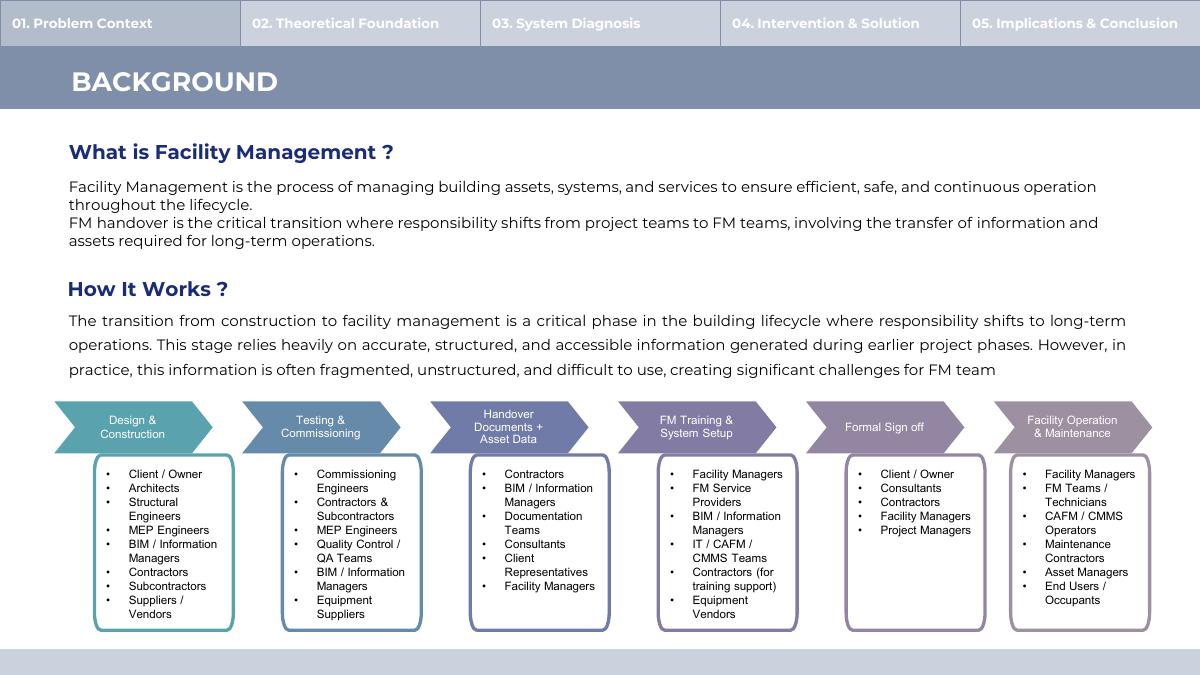
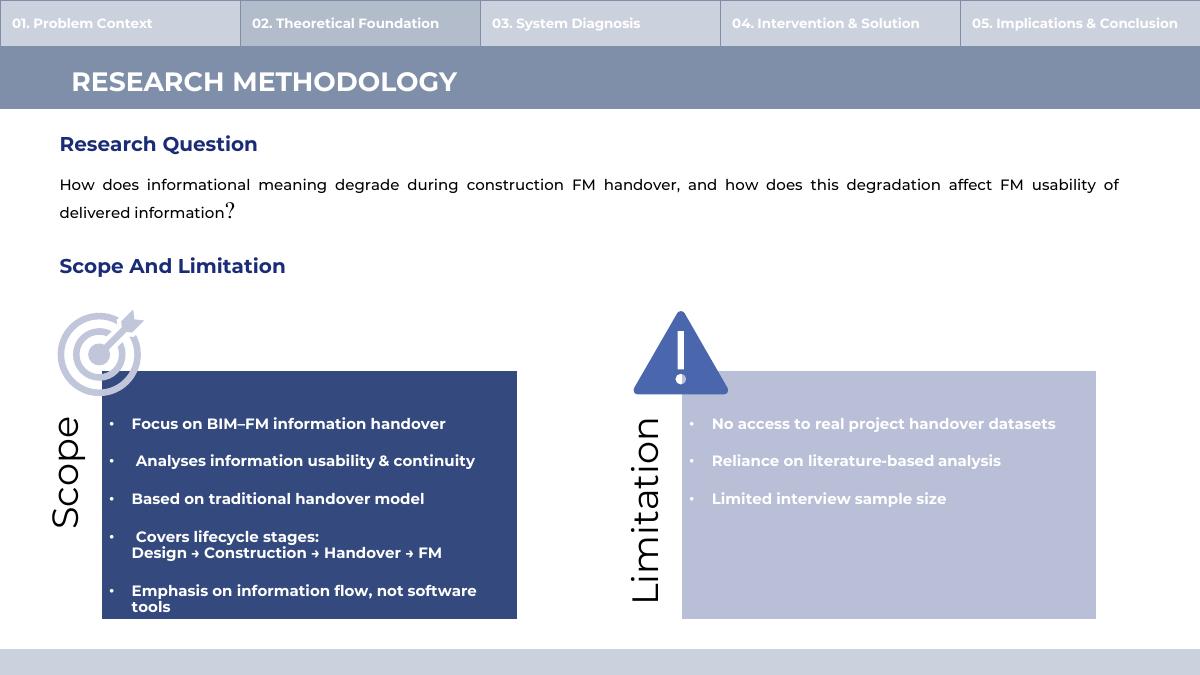
Madesai and BIMCrew formulated this CEPT University MSc Directed Research Project to investigate construction-FM handover as a loss of information meaning rather than simply a missing-document problem. The research was completed by Aditya Parihar in the Master of Construction Engineering & Management programme. The supervision engagement focused the work on a precise question: why can BIM models, drawings, asset registers, commissioning records, and O&M information be present at handover while still requiring interpretation and manual reconstruction before FM teams can use them?
The challenge
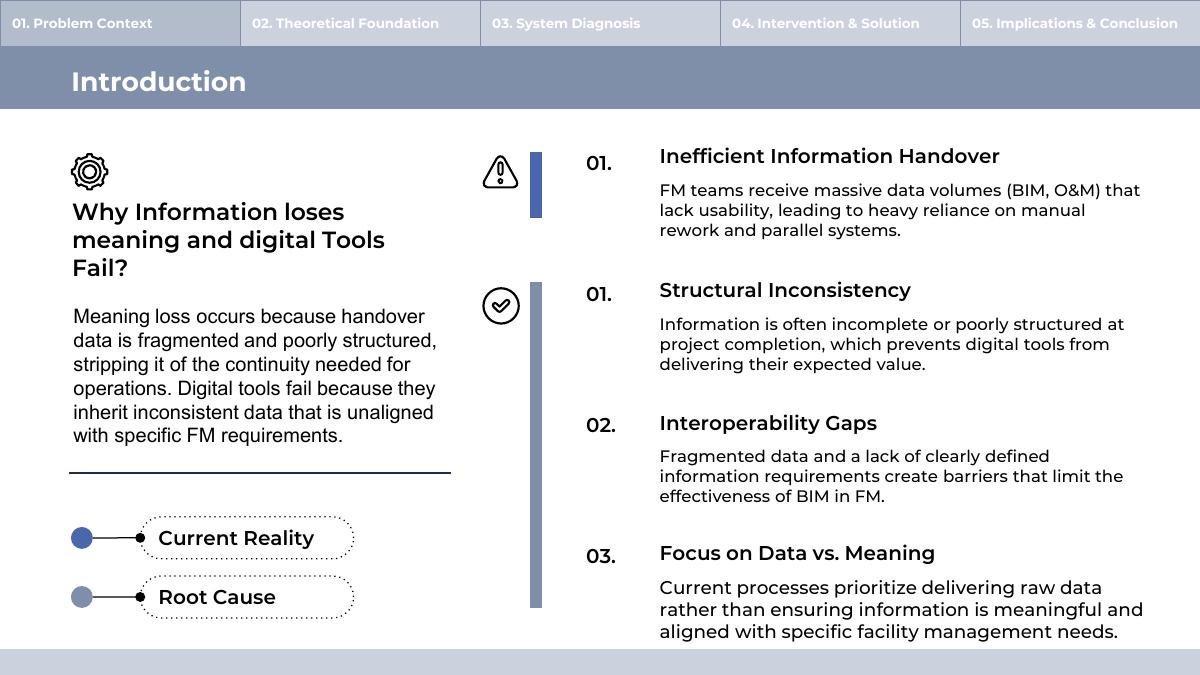
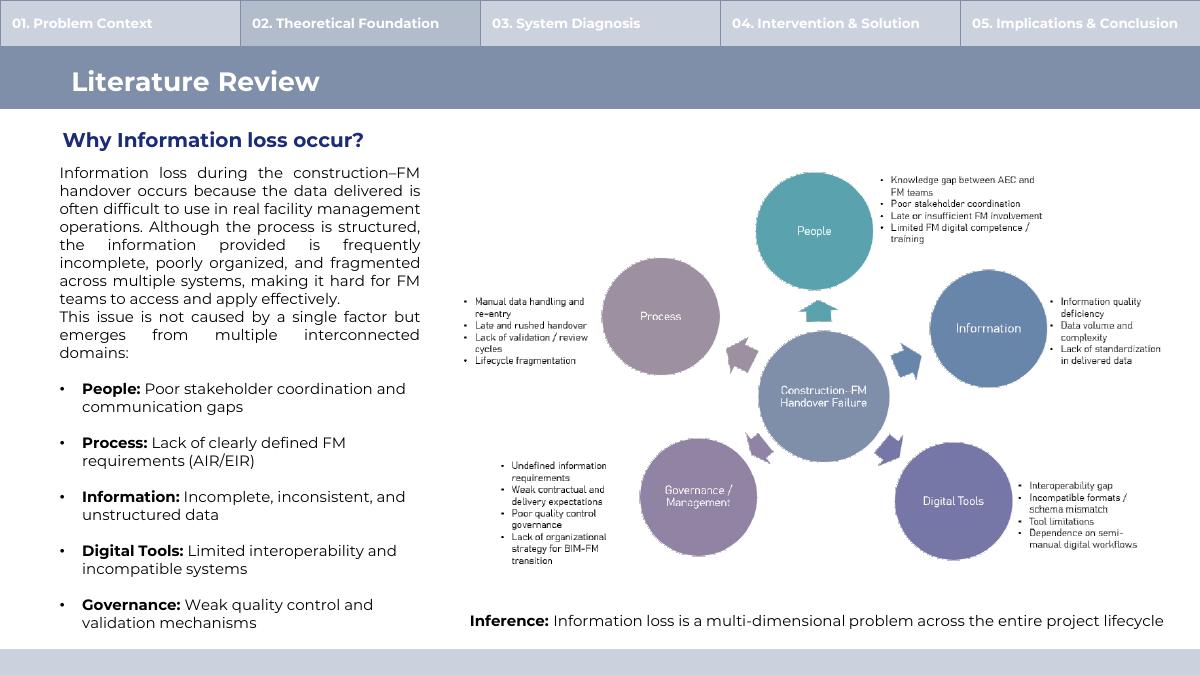
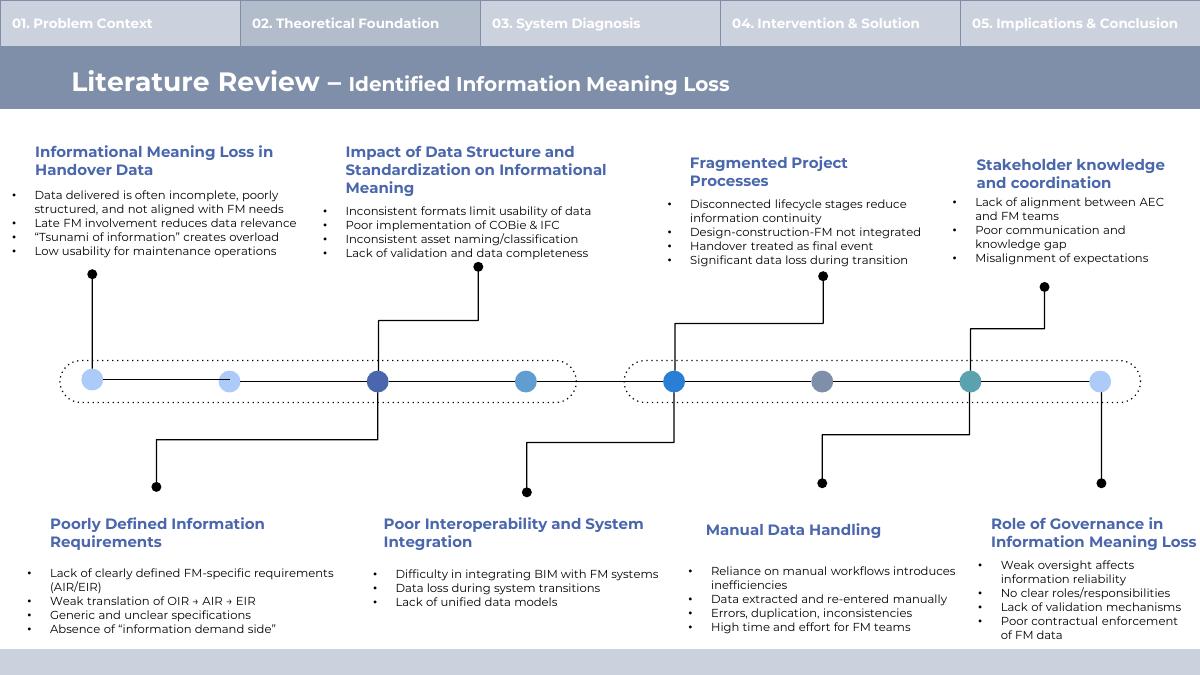
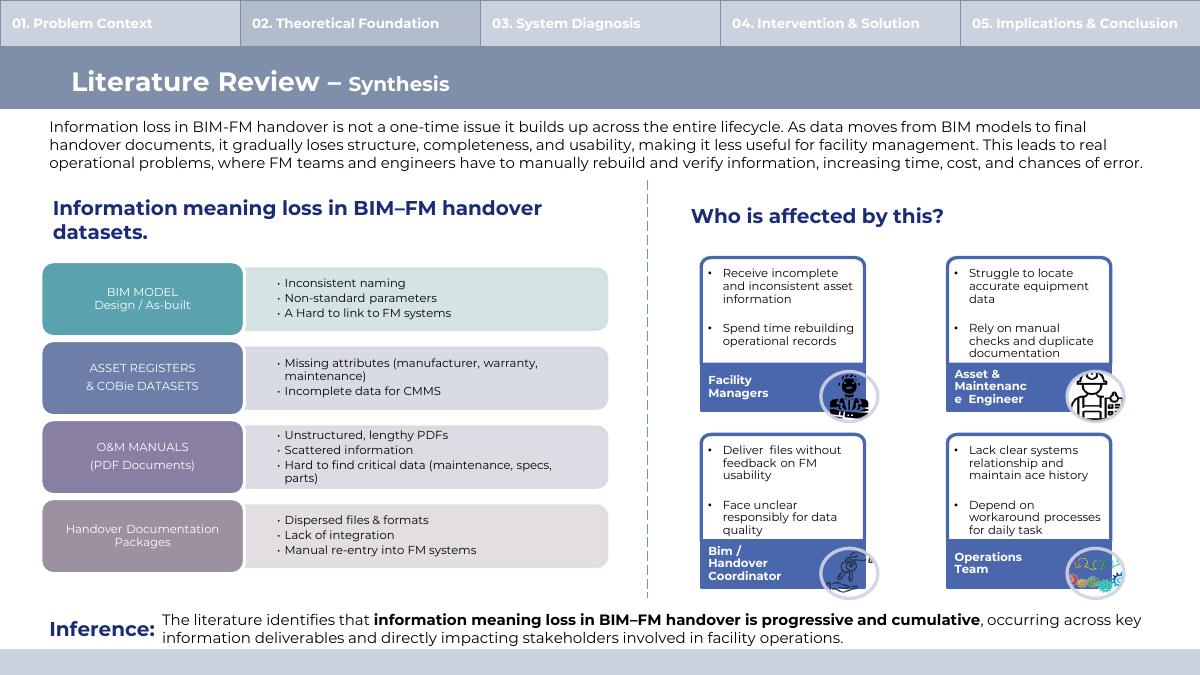
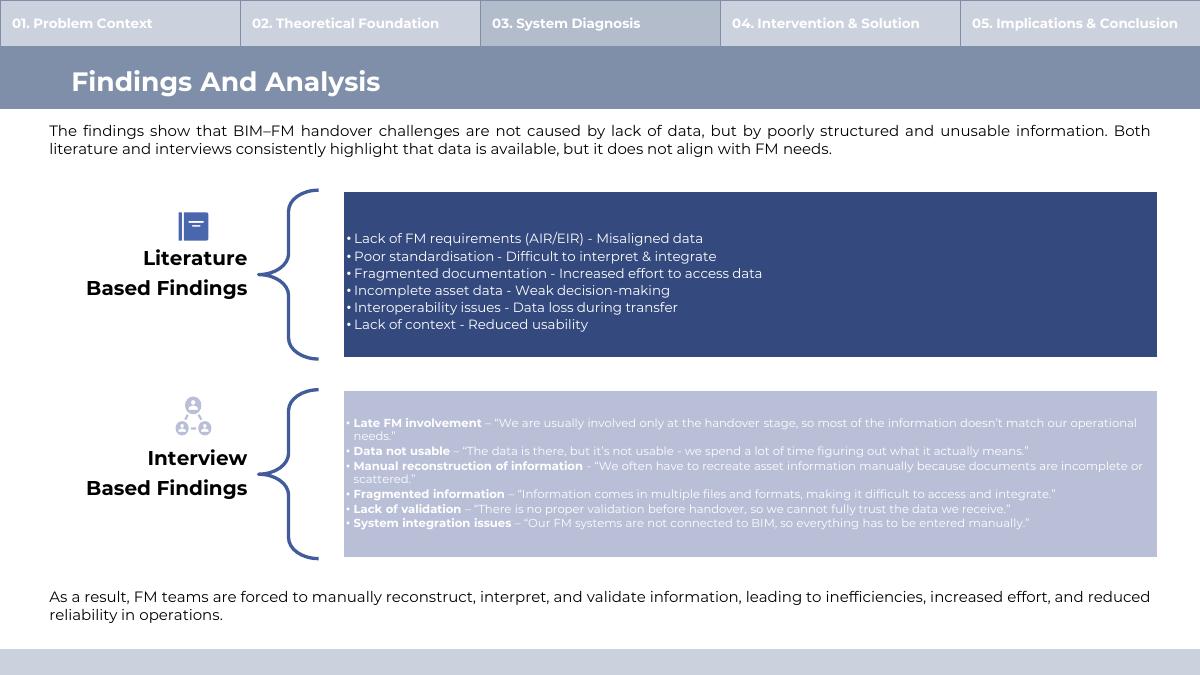
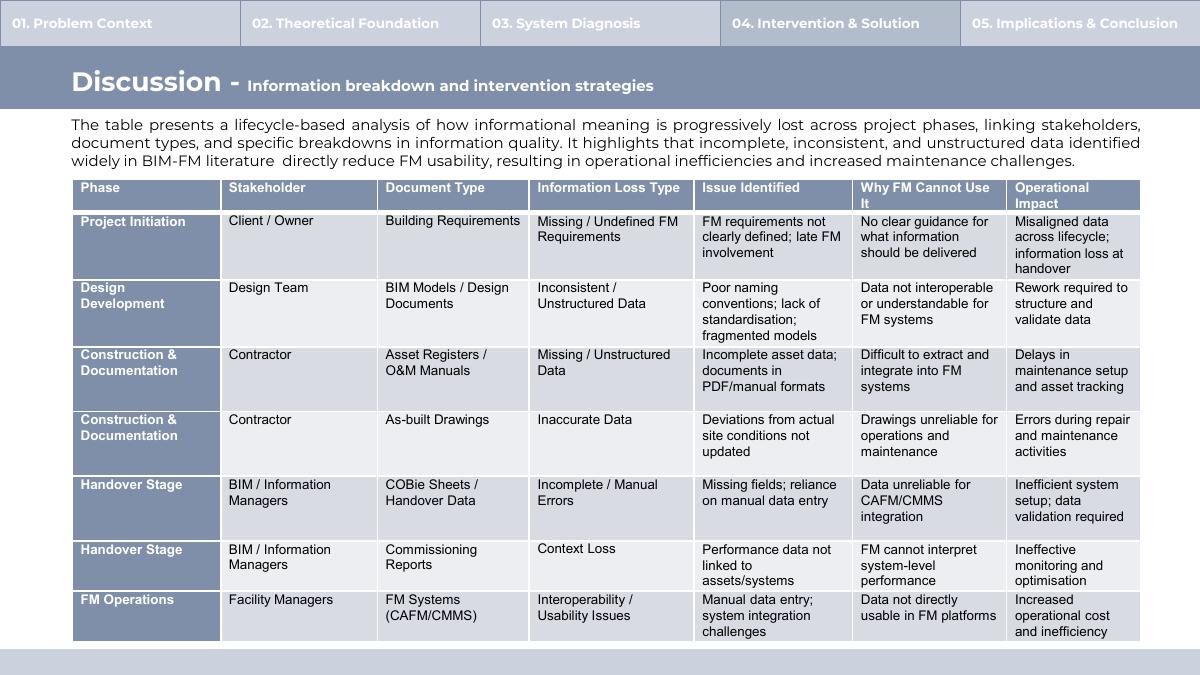
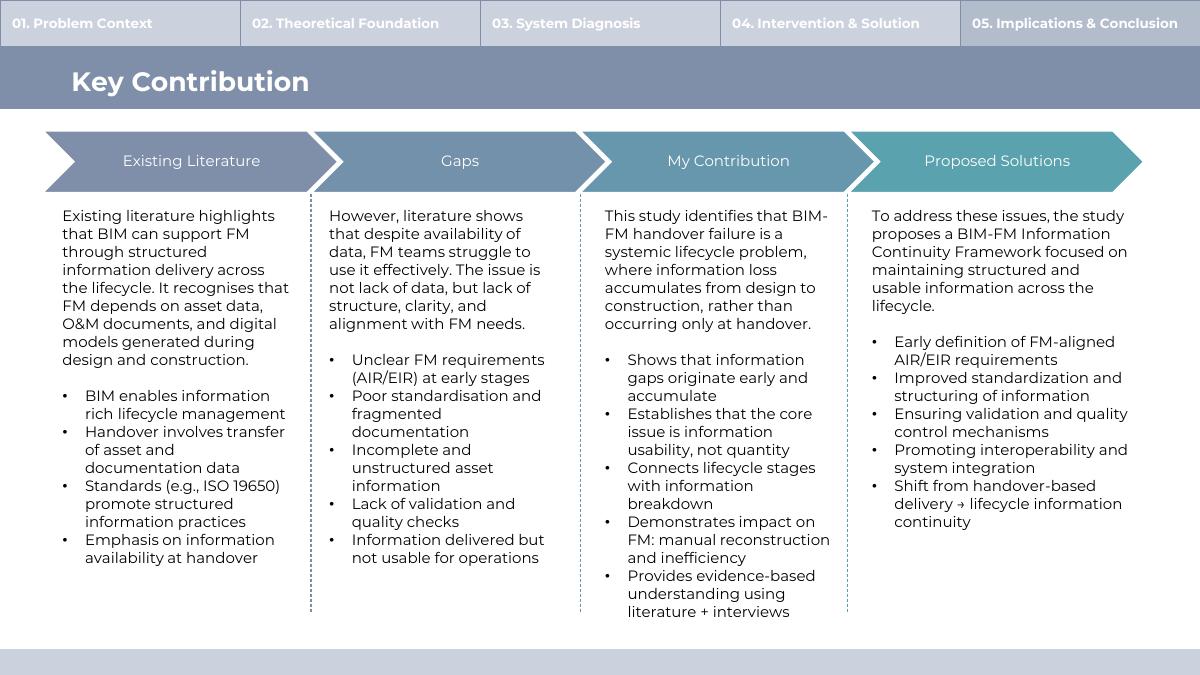
Information can be present and still be unusable. Asset data may lack operational purpose, consistent naming, classification, required attributes, machine-readable structure, relationships between assets and systems, accuracy, or continuity between project and FM platforms. Digital tools cannot reliably repair context and relationships that were never preserved. The research challenge was therefore to identify how meaning degrades across the lifecycle, explain why the failure becomes visible at handover, and define interventions before information reaches FM operations.
MADESAI's role
Madesai originated the research problem, translated it into the DRP brief with BIMCrew, and supervised the work from problem definition through the proposed lifecycle framework. The role included defining the research scope; guiding the BIM-FM, COBie, information-requirements, and Linked Data literature review; reviewing the methodology and practitioner evidence; coordinating progress, interim, and revision discussions; guiding the classification of meaning loss; and directing the mapping of information breakdowns across project initiation, design, construction, handover, and FM operations. Madesai also reviewed the report and framework development, completed formal guide evaluation, and reviewed the final academic delivery.
Outputs
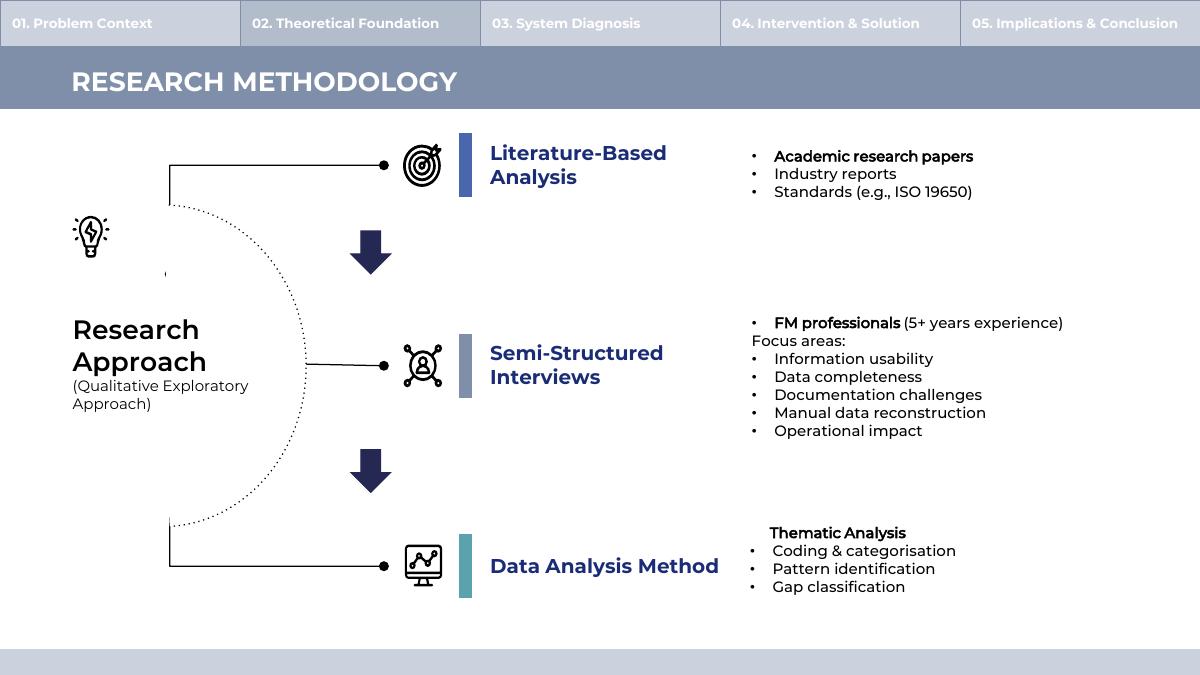
- Analysis informed by interviews with 10 experienced facility-management professionals
- Classification of context, semantic, completeness, structure, accuracy, and continuity failures
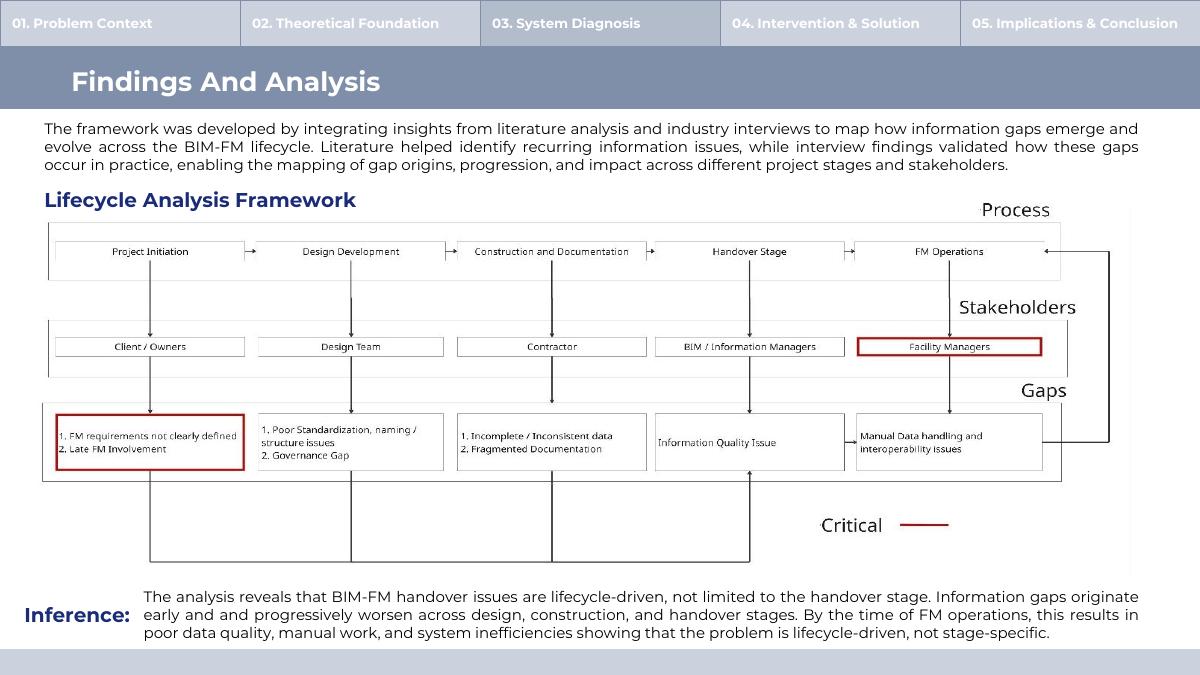
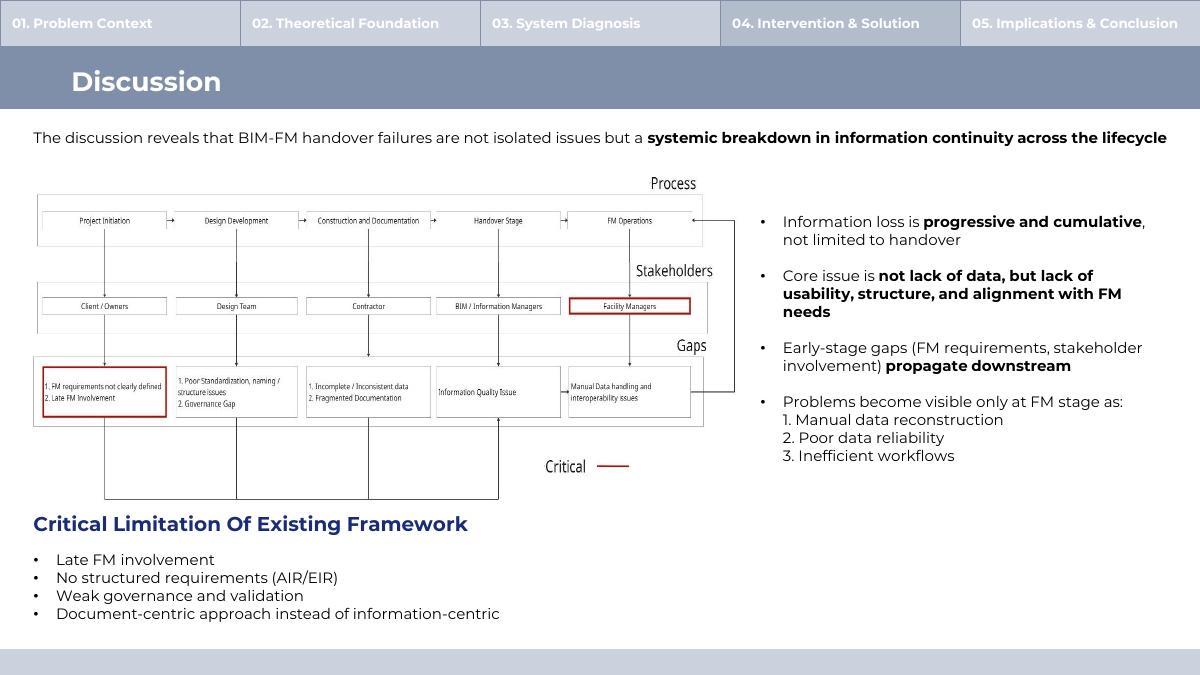
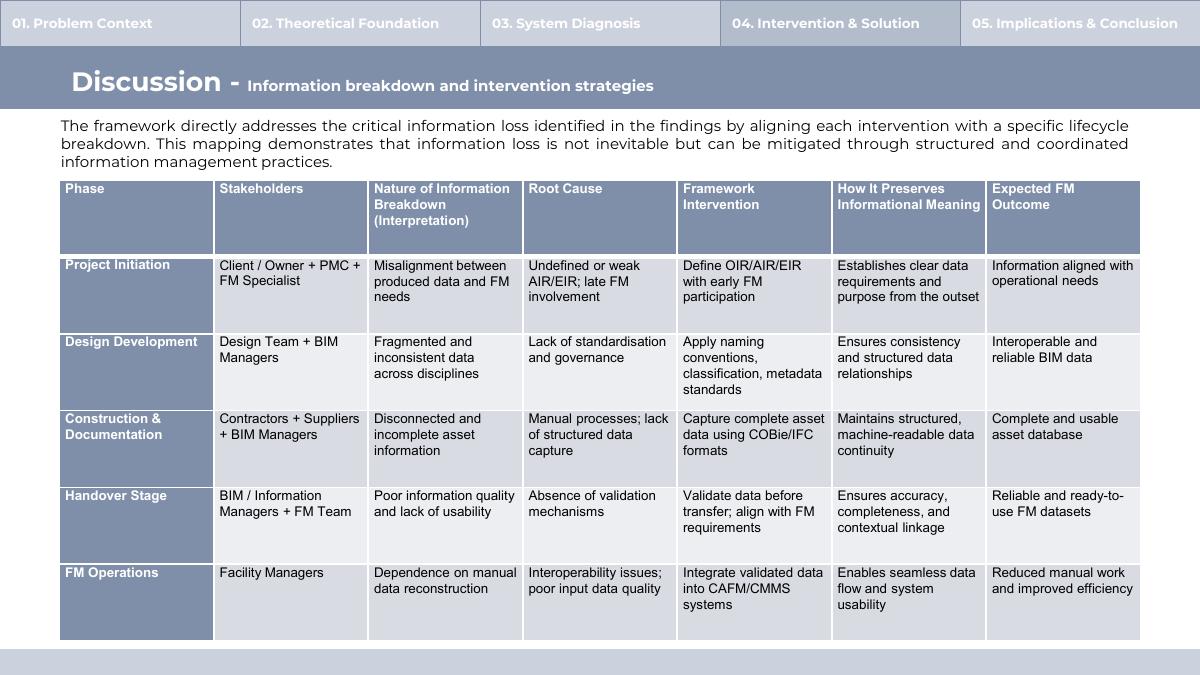
- Lifecycle mapping of how information meaning degrades from project initiation through FM operations
- Analysis of information requirements, COBie, BIM-FM exchange, and Linked Data perspectives
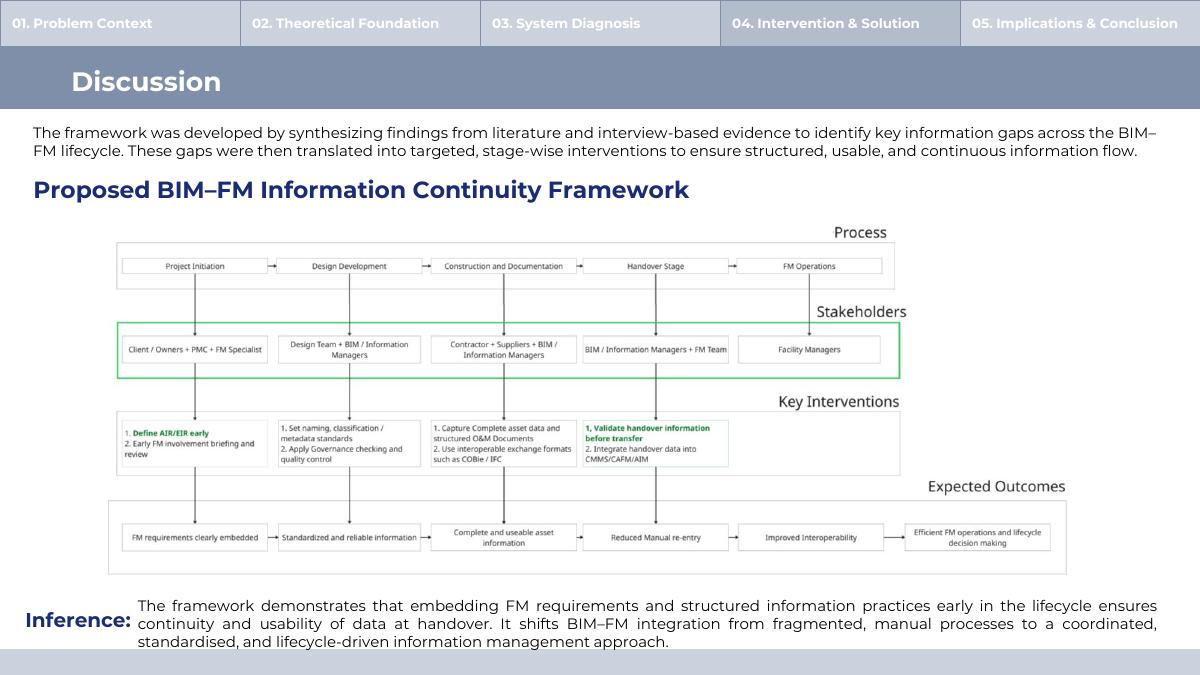
- Identification of stakeholder and governance interventions across project stages
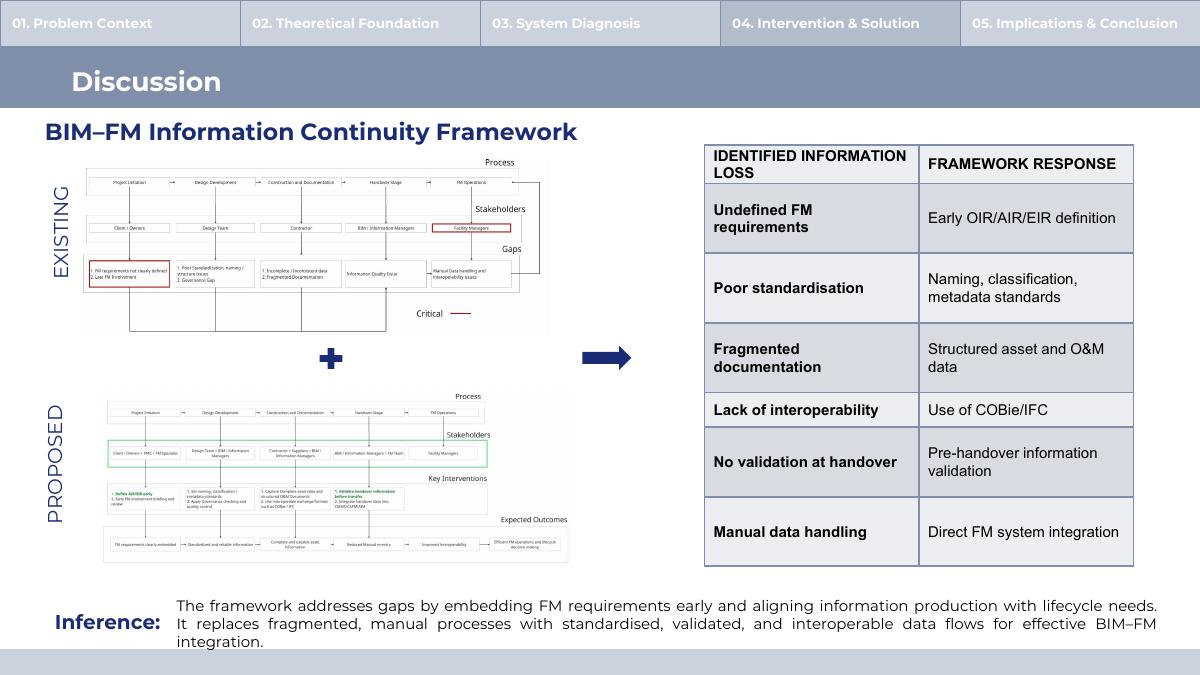
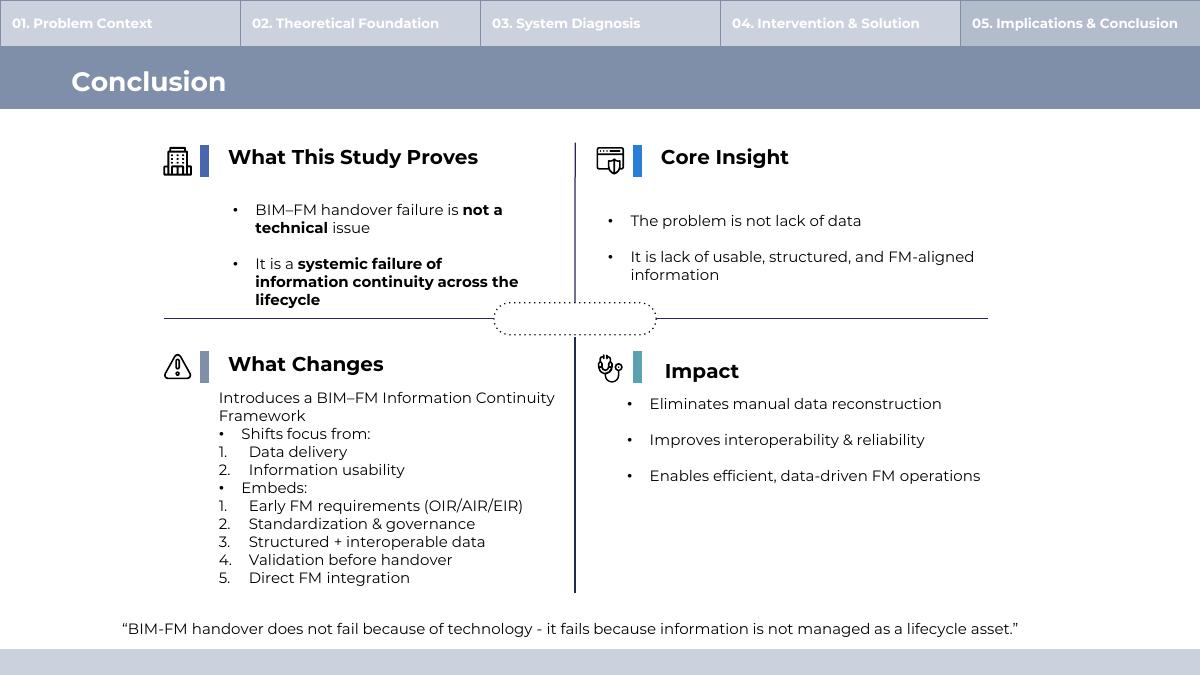
- BIM-FM Information Continuity Framework
Practical value
Madesai posed the problem of why BIM models, records, and asset information can be present at handover yet remain unusable for facility operations. Over the three-month DRP, the research found that the visible handover failure often begins earlier through lost context, inconsistent meaning, incomplete relationships, weak structure, uncertain accuracy, and broken continuity. The resulting framework helps project and FM teams locate where information meaning is likely to degrade and identify earlier lifecycle interventions that may preserve operational usability. Live-project validation remains necessary before implementation.
Responsible boundary
This was an academic Directed Research Project formulated and supervised by Madesai and BIMCrew and completed by a CEPT University MSc student. Direct project-specific handover datasets were not available; the study used literature-based proxy analysis and interviews with FM professionals. The proposed framework remains conceptual and requires validation through live project application. The work did not implement BIM-FM integration, configure a CAFM or CMMS platform, certify a COBie dataset, conduct software testing, or guarantee operational-performance improvement.